Resource planning is becoming increasingly complex in many companies. Projects change faster, skill requirements increase and at the same time there is often a lack of transparency about which skills are actually available. This is precisely why structured skills management is becoming more important. In the previous article “Skills instead of job profiles“, we already showed why job profiles are reaching their limits.
However, many companies still work with Excel lists, isolated HR systems or outdated skill matrices. This results in duplicate data maintenance, a lack of overview and difficult project staffing. Modern HR platforms based on Dynamics 365, on the other hand, enable central and integrated management of skills, qualifications and employee profiles.
In this article, you’ll learn how companies can manage employee skills in Hubdrive for Dynamics 365 , the benefits of integrated skill data, and what to look out for when rolling them out.
Why classic skill management is often no longer sufficient
In many organizations, skills are still managed in a decentralized manner. Information on certificates, experience or qualifications is distributed in different systems or is maintained manually. At the same time, requirements are changing much faster than a few years ago.
This poses a problem for project-driven companies in particular. They have to decide at short notice which employees fit which projects, which skills are missing and where further development is necessary. Without a central database, this control system quickly becomes confusing.
In addition, skills today are much more than just HR information. They directly influence project planning, staffing, forecasting and resource management. As a result, a lack of transparency is increasingly becoming an operational problem.

What role skills play in companies today
Skills are used much more strategically today than in the past. Companies must react more quickly to new requirements, staff projects more flexibly and at the same time use existing resources economically.
This creates new demands on HR and project management:
- Making skills centrally visible
- Manage project staffing faster
- Recognizing skill gaps at an early stage
- Planning further development in a more targeted manner
Especially in combination with project operations and resource planning, up-to-date skill data is becoming increasingly important. Companies need transparency about what skills are available and how teams can be put together in a meaningful way.
How Skills Management works in Dynamics 365
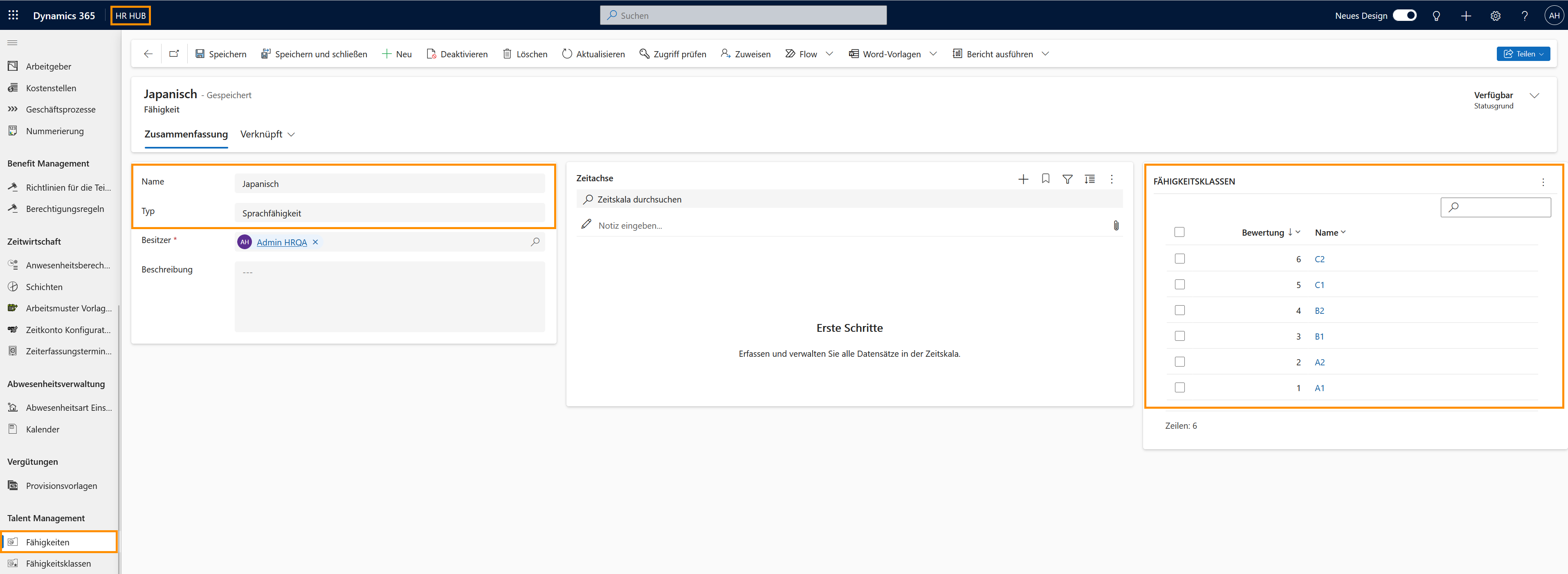
Dynamics 365, together with integrated HR solutions such as Hubdrive, offers the possibility to centrally manage employee skills. Skills, certificates, qualifications and experience can be maintained and evaluated directly in employee profiles. This creates a central database that is available to HR, project management and managers at the same time.
Typically, the following can be managed, among other things:
- Professional skills
- Certifications
- Language skills
- Project experience
- Further training
- Skill Levels and Assessments
The information is no longer isolated in individual files or systems, but directly within the existing Dynamics environment. This not only improves transparency, but also reduces manual maintenance and duplicate data storage.
Why Integrated Skill Data Becomes Important for Project Planning
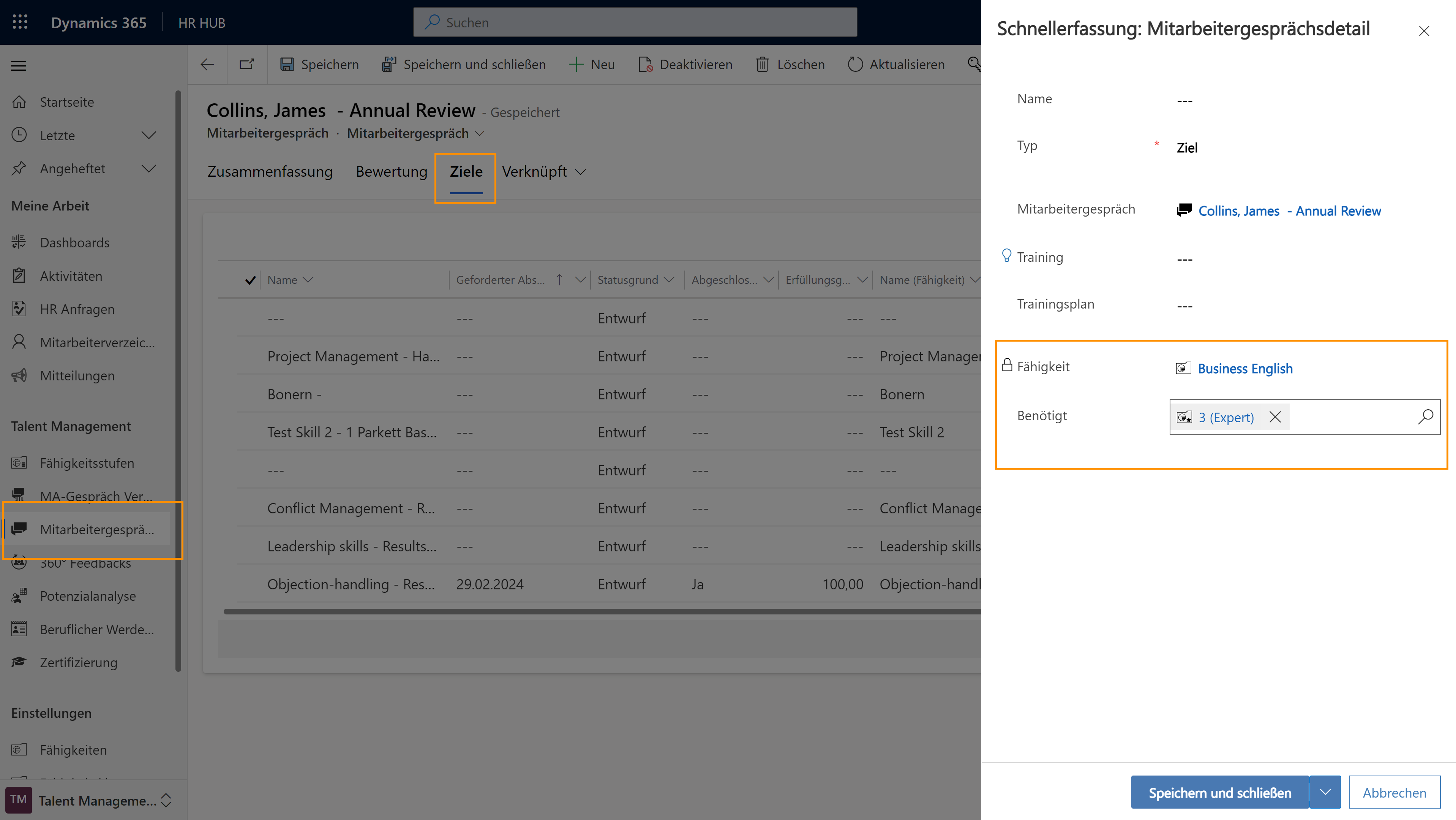
Especially in project-oriented companies, skill transparency is increasingly becoming a competitive factor. Project teams need to be assembled faster, and at the same time, the requirements for specialization and availability are increasing. Without up-to-date skill data, problems often arise in resource planning. Employees are planned incorrectly, skills are overlooked or projects are delayed due to a lack of transparency.
With integrated skill data, project staffing can be controlled in a much more targeted manner. Companies can see more quickly:
- what skills are available
- which resources are being used
- where qualifications are lacking
- which employees fit certain projects
This not only improves the planning but often also the profitability of projects.
How AI and Copilot make skills more transparent
AI is also creating new opportunities for modern skills management. Microsoft is currently expanding Dynamics 365 and the Power Platform strongly with AI functions and Copilot support. This means that skill data can not only be stored, but increasingly intelligently evaluated and used.
Examples include:
- Automatic skill recommendations
- Analysis of skill gaps
- Support for project staffing
- intelligent search functions
- Evaluation of development needs
Especially in larger organizations, this creates new possibilities for workforce planning and resource management. At the same time, it becomes clear that AI only works meaningfully if the underlying data is maintained consistently and up-to-date.
What companies should pay attention to when introducing
Many companies initially focus on the technical implementation during the introduction. In practice, however, it quickly becomes apparent that processes and data quality are at least as important. Particularly crucial is the question of which skills are actually relevant and how they should be uniformly maintained. Without a clear structure, different assessments and inconsistent data quickly arise.
Important success factors are therefore:
- clear skill categories
- Uniform evaluation logics
- Regular data maintenance
- Clear responsibilities
Equally important is employee acceptance. Skills management only works meaningfully in the long term if information is kept up-to-date and actively used.
Why skills management is becoming increasingly strategic
Skills are changing faster today than traditional job profiles. At the same time, the pressure on companies to use resources flexibly and to develop skilled workers in a more targeted manner is increasing.
As a result, skills management is increasingly developing from a pure HR task to a strategic control function. Today, capabilities directly influence project planning, delivery quality, forecasting and growth.
Especially in combination with AI, project operations and modern resource planning, it becomes clear how important central and up-to-date skill data is becoming.
Companies that create transparency at an early stage can manage projects more flexibly and absorb changes more quickly.
Conclusion
Modern resource planning requires much more transparency about skills and qualifications than it did a few years ago. At the same time, classic skill matrices and isolated systems are increasingly reaching their limits.
With Dynamics 365 and integrated HR solutions such as Hubdrive, employee skills can be managed centrally and integrated much better into operational processes. This not only improves HR processes, but also project planning, staffing and resource management.
Skills management will continue to gain in importance in the future, especially with regard to AI and modern project operations structures.
FAQ
What is Skills Management in Dynamics 365?
Skills Management in Dynamics 365 describes the central management of skills, qualifications, and certificates within the Dynamics platform.
Why is skills management becoming increasingly important?
Because companies have to react more quickly to new project requirements and use resources in a more targeted manner.
What are the advantages of integrated skills management?
Central skill data improves transparency, project planning, resource management and employee development.
How does AI support modern skills management?
AI can identify skill gaps, support project staffing and analyze development needs.
What skills can be managed in Dynamics 365?
For example, professional skills, certificates, language skills, further training and project experience.
Why are Excel skill matrices often no longer sufficient?
Because they are often outdated, isolated and difficult to scale.
How does Skills Management improve resource planning?
Companies can see more quickly which skills are available and which employees are a good fit for certain projects.
What role does Hubdrive play in skills management?
Hubdrive extends Dynamics 365 with integrated HR functions for the central management of employees, skills and HR processes.