


From data to relationships: How the right CRM makes the difference.
In the era of digital transformation, where customer relationships make all the difference to business success, customer relationship management (CRM) plays a central role. The way companies interact with their customers and build relationships has changed dramatically in recent years. Customers expect personalized experiences, tailored solutions, and seamless communication. This article explores the key challenges and opportunities in modern customer relationship management, highlights the benefits of a digital CRM solution, and takes a closer look at innovative approaches that help companies take customer relationships to a new level. Dive into the world of customer relationship management and discover how the right strategy and technology paves the way for long-term, successful customer loyalty.

By 34%
increases the productivity of the sales team with the effective use of a customer relationship management system.
According to this trend report , the use of a customer relationship management system is worthwhile.
Challenges of CRM for SMEs
Limited resources
SMEs often have limited financial and human resources. The implementation and maintenance of a CRM system can therefore be a financial and personnel burden.
Lack of data quality
SMEs often struggle to collect and maintain high-quality customer data. Incomplete or outdated data affects the effectiveness of the CRM and leads to inaccurate analyses.
Lack of expertise
SMBs may not have the in-house expertise to make the most of complex CRM systems. Training employees and ensuring an understanding of the functionalities is crucial.
Adaptation to individual needs
Every company has unique requirements. The challenge is to find or adapt a CRM system that meets the specific needs of the SME exactly.
Acceptance by employees
The introduction of a CRM system requires the cooperation of all employees. Acceptance and willingness to use the system can be challenging.
Data protection and compliance
The handling of customer data requires careful attention to data protection regulations and compliance guidelines. SMEs need to ensure that their CRM system meets these standards.
Customer Service Optimization
Implementing effective customer service as part of CRM requires clear processes and fast response times, which can be challenging for smaller businesses with limited resources.
The symbiosis of technology and trustworthiness in customer relationships
Organizations are challenged to leverage innovative technologies to improve customer experiences, while also earning and maintaining the trust of their customers.
In an era where technology is setting the tone, the challenge for companies is not only to use innovative tools, but also to build an authentic and trustworthy connection with their customers. Because real relationships require more than automated messages – they need the personal touch.
Technology as a connecting element:
Modern means of communication allow companies to interact with their customers in real time. But while emails, chatbots, and automated responses are efficient, the human aspect can’t be neglected. Technology should serve as a means to improve communication, not as a substitute for face-to-face contact.
The importance of the personal:
In the digital world in which we operate, customers crave personal attention. Personal contact, whether in the form of phone calls, video conferences or face-to-face meetings, creates a human connection that machine interactions cannot replace. Companies should find ways to maintain this personal touch.
Trust through authenticity:
Trust comes from authenticity. Companies should not only communicate transparently about their products and services, but also about their values and the people behind the brand. Authentic stories and insights into everyday work can create a deeper connection between companies and customers.

Success with digital CRM
Digital customer relationship management (CRM) is undoubtedly the key solution for companies that crave seamless transactions, efficient sales, and sustainable customer relationships. The challenge of providing all relevant resources in one place is effortlessly overcome by a digital CRM.
The essential elements, from lead generation and pipeline management to the joint processing of sales documents, are clearly brought together in a central system. Not only does this allow for optimal use of information, but it also creates space for your sales reps to build strong relationships with their customers.
The comprehensive solution of a digital CRM system automates time-consuming tasks and allows your team to focus on nurturing customer relationships. With an intuitive and easy-to-use application, it provides a holistic view of your customers, supports the transformation of data from large volumes and transforms it into actionable insights.
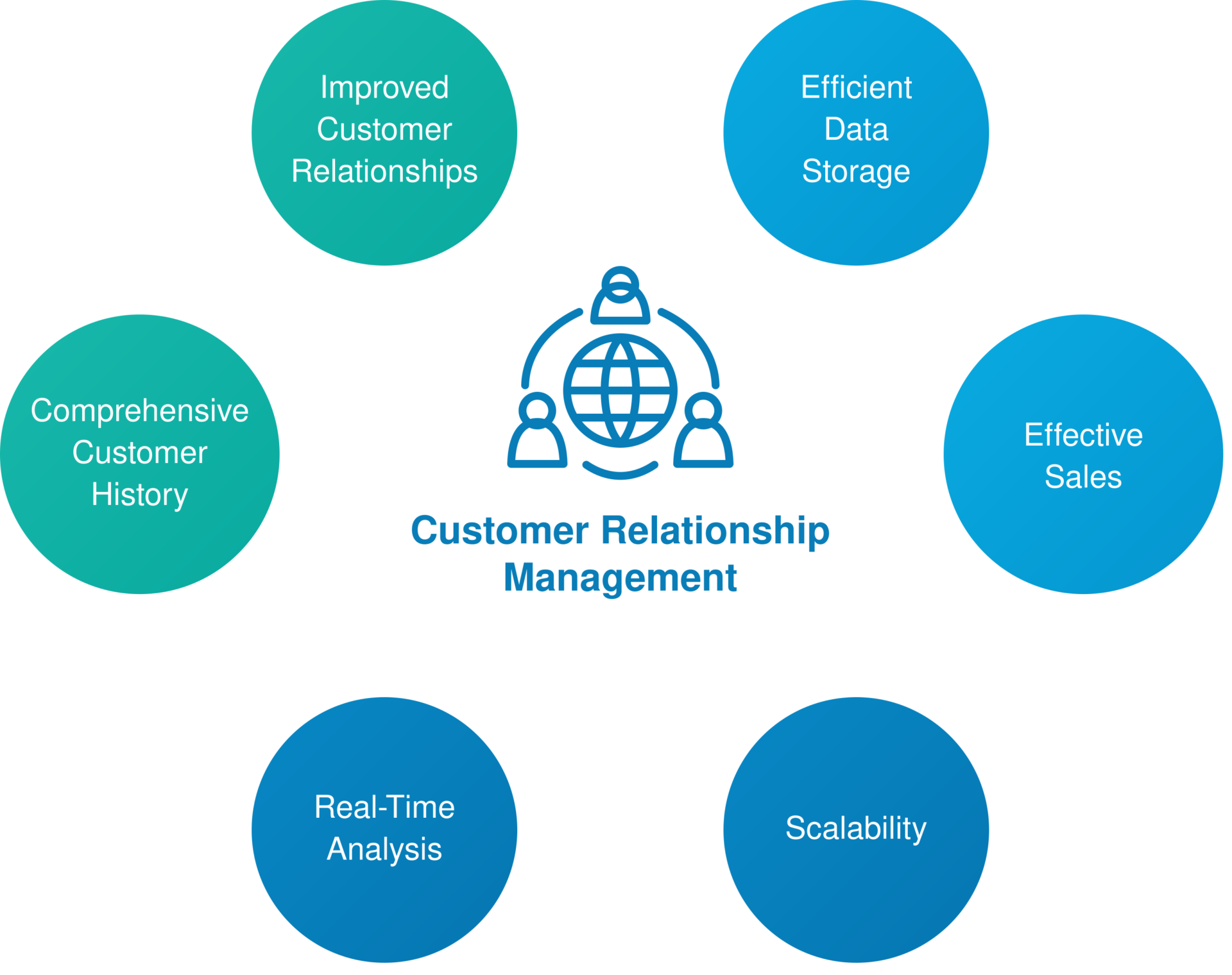
- Improved customer relationships through a comprehensive understanding of needs
- Efficient management of customer data through a central platform
- Comprehensive customer history by collecting data on interactions and transactions
- Effective sales by streamlining sales processes and tracking sales activity
- More targeted marketing strategies by analyzing customer behavior and preferences
- Efficient customer service management through better organization of support requests, automated customer service and a shorter response time
- Higher customer satisfaction through a more targeted approach as well as faster and more personal support
- Make informed decisions thanks to real-time analysis of current trends, services and bottlenecks
- Scalability of the system and adaptation to the growth of the company
- Competitive advantage through the effective use of customer information and the optimization of business processes

Features of Microsoft solutions for your customer relationship management
Dynamics 365 Sales: Sales Power in the Age of AI
Microsoft Dynamics 365 Sales not only provides an increase in sales productivity through simultaneous collaboration and integration with Outlook, but also deep insights through predictive lead scoring powered by artificial intelligence. These features allow sales reps to identify and serve prospects more efficiently.
Microsoft 365: Redefining collaboration for unbeatable results
Microsoft 365 makes it easier to collaborate and communicate across the enterprise. The integration of offers and pitch decks on SharePoint as well as group chats via Microsoft Teams promotes a smooth exchange of information within the team. This allows sales reps to collaborate more effectively and resolve customer inquiries faster.
Dynamics 365 Customer Service: Customer Service of the Future – Automation Meets Individuality
Microsoft Dynamics 365 Customer Service automates core sales functions and ensures that sales reps have more time to focus on the unique needs of their customers. By automating business processes, customer inquiries can be processed faster and more precisely, which contributes to improved customer satisfaction. These digital solutions thus form a comprehensive basis for the effective management and maintenance of customer relationships by covering the entire sales cycle.