Rising costs, high interest rates and uncertain markets make liquidity a critical factor. Each receipt of payment can decide whether projects are implemented or postponed.
Many companies still rely on classic management tools that provide a static overview at best. They show where the company stands today – but not how payment flows will develop tomorrow. It is precisely this gap that becomes dangerous: investments can falter, financing becomes more expensive and growth falls short of the possibilities. This is where Dynamics 365 Business Central comes into play: With automated cash flow forecasts, risks become visible at an early stage, opportunities can be exploited – and decisions gain clarity.
The weaknesses of classic liquidity planning
Many companies still rely on tools that manage rather than control. The problem:
-
Static view – they only show the current state, not the development.
-
High manual effort – data must be collected and checked regularly.
-
No scenarios – possible payment delays or investments are not taken into account.
-
Lack of integration – Financial data is often separate from projects, budgets, or bank accounts.
The result: decisions are based on snapshots – not on an informed preview.
How Business Central Automates Cash Flow Forecasting
Many systems only provide a snapshot – Business Central goes further. The ERP system links finances, purchasing, projects, and bank accounts in a single dashboard. This creates an end-to-end view of liquidity and future cash flows – automatically, integrated and in real time.
-
All data sources in one system
Accounts receivable and payable, budgets, open invoices, and planned investments are automatically included in the forecast. -
Automatic update
Changes in accounting, purchasing, or projects are immediately incorporated into the cash flow calculation – no manual reconciliation necessary. -
Scenarios at the touch of a button
“What happens if a major customer pays late?” – Business Central shows the impact immediately and makes bottlenecks visible at an early stage. -
Visual clarity
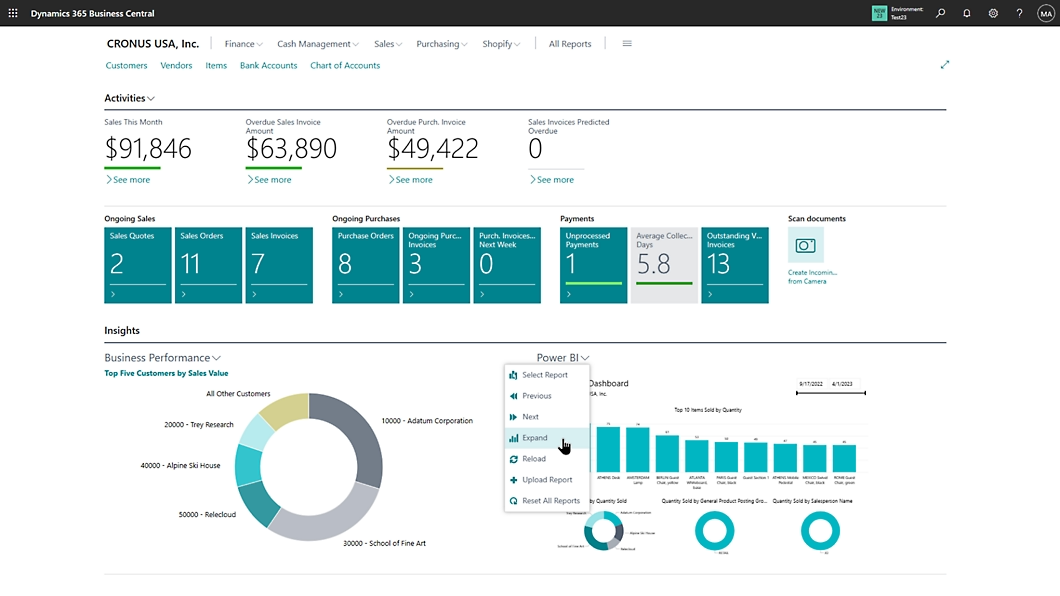
Dashboards and charts illustrate how revenue, expenses, and liquidity are evolving. This allows trends to be identified quickly and decisions to be made in management or with banks in a well-founded manner.
The result: dynamic control intelligence instead of static tables – with forecasts that are as up-to-date as your business.
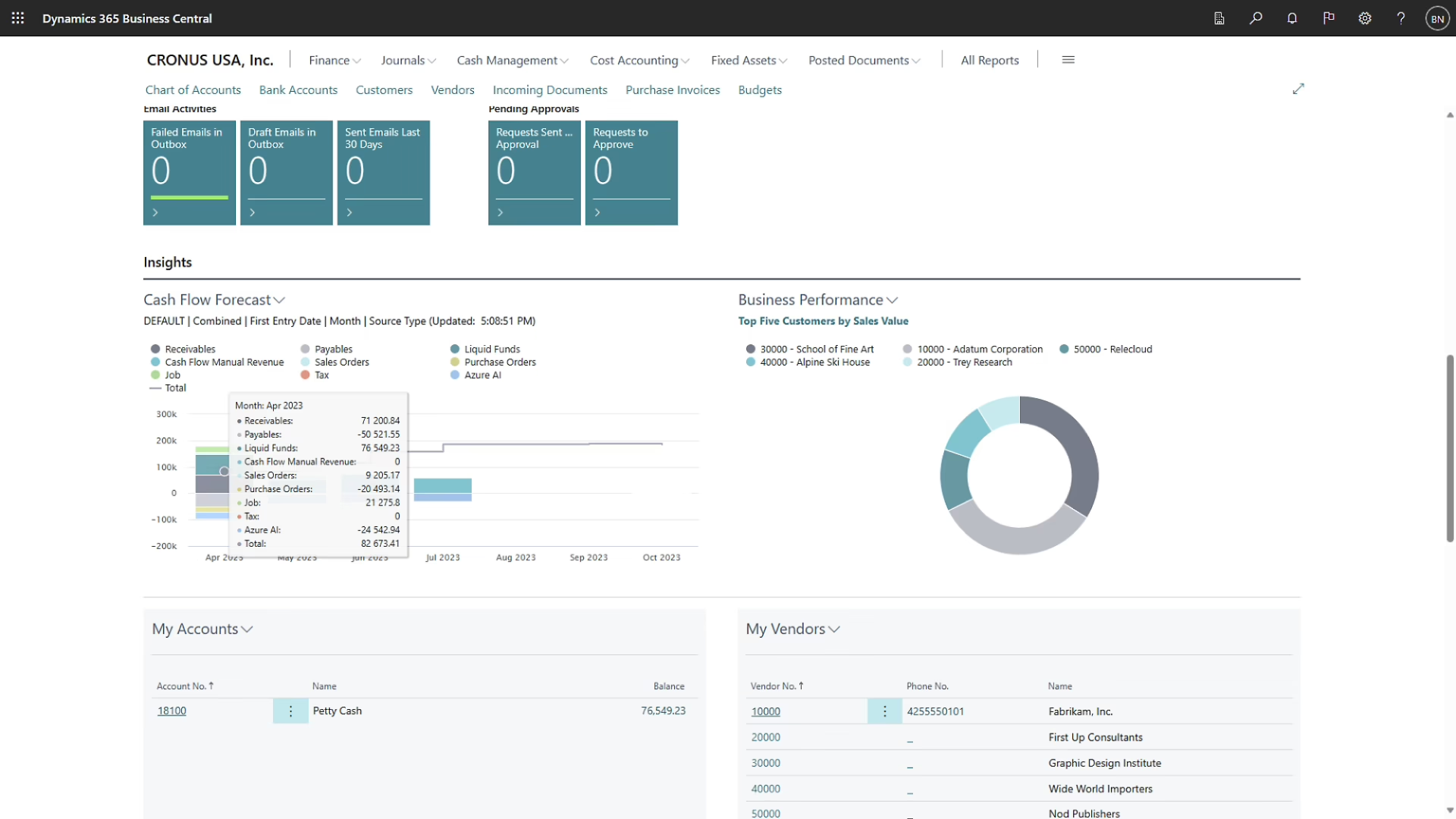
Step-by-Step to Cash Flow Forecasting in Business Central
Setting up a cash flow forecast in Business Central is clearly structured and directly adapted to everyday business:
-
Configure Setup
The cash flow module defines the relevant data sources – from debtors and creditors to budgets and bank accounts. -
Integrate payment flows
Open invoices, recurring payments, and planned investments are automatically included, so no item is missed. -
Calculate Forecast
With one click, Business Central creates a preview of liquidity for the coming weeks or months – up-to-date, accurate and transparent. -
Playing through scenarios
Whether it’s late customer payments, rising costs or new investments, Business Central immediately simulates the effects and shows possible options for action. -
Visualize results
Dashboards and reports provide easy-to-understand graphics that make trends visible – perfect for management meetings or bank meetings.
Business Value: Why Cash Flow Forecasts in Business Central Are More Than Numbers
An automated forecast not only provides transparency, but also changes how companies make financial decisions:
-
Planning security for CFOs and management
Investments, projects and personnel decisions are made on the basis of valid forecasts – not on uncertain assumptions. -
Early warning system for risks
Potential bottlenecks become apparent at an early stage so that measures can be initiated in good time. -
Stronger position with banks and investors
Those who can present up-to-date forecasts at any time strengthen trust and receive better conditions. -
More efficient use of liquidity
Free funds can be used in a targeted manner to finance growth and seize opportunities more quickly. -
Sustainable competitiveness
Companies that actively manage their cash flows are more resilient and agile than their competitors.
In short, Business Central turns cash flow planning into a strategic management tool – and turns uncertainty into clarity.
Conclusion: Financial stability needs foresight
In an uncertain economic environment, the quality of liquidity planning is decisive for stability and growth. Classic tools only provide retrospectives – Business Central, on the other hand, makes cash flow controllable: automated, integrated and up-to-date at all times.
This creates a real advantage – through more planning security, better negotiating positions and the opportunity to actively use opportunities instead of missing them.
👉 In 15 minutes , let’s discuss how cash flow forecasts in Business Central can secure your financial planning.