There are many CRM systems – but which one really suits a medium-sized company with growing requirements? In this article, we’ll compare two of the most well-known solutions: Microsoft Dynamics 365 Sales and Hubspot. This is not about theoretical functions, but about the actual business value: scalability, automation, integration and efficiency.
Two strong brands – two different approaches
Hubspot was developed as a marketing platform and is particularly strong in the field of inbound marketing. It convinces with a modern interface and an easy start – ideal for smaller teams that want to start quickly. Dynamics 365 Sales, on the other hand, is part of the Microsoft ecosystem and is designed for complex sales processes, scalability, and in-depth evaluations. The solution is particularly suitable for companies that want to map structured processes and scale them professionally.
User guidance and suitability for everyday use
Hubspot offers a very intuitive interface that is quickly understood even without training. Dynamics 365 Sales requires a little more training, but offers more control – for example, through customizable views, forms, and user roles. Those who have to manage several teams, countries or complex processes benefit from this flexibility.
Automation and workflows
In the area of automation, the systems differ significantly. Hubspot offers simple workflows for standard cases, especially in marketing. Dynamics 365 Sales, on the other hand, integrates Power Automate for company-wide processes, enables rule-based lead scoring, automatic task distribution, and AI-powered recommendations through Microsoft Copilot. This is a clear advantage, especially with growing requirements.
Integration with existing systems
A key difference lies in integration. Hubspot works well as a standalone solution, but for many business processes it needs to be connected via third-party vendors. Dynamics 365 Sales integrates seamlessly with Outlook, Teams, Excel, SharePoint, and Power BI. This not only saves time, but also increases data security and consistency.
Reporting and analysis
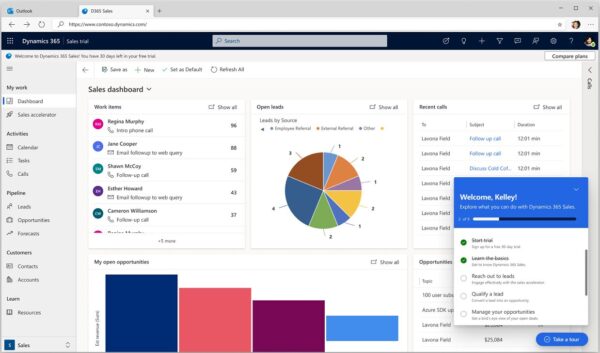
While Hubspot offers standard reports and simple dashboards, Dynamics 365 Sales goes much further. Sales reports, opportunity analyses and customer journey evaluations can be combined with Power BI and displayed in real time. This is a decisive advantage, especially when it comes to data-driven decisions in sales.

Value for money
Hubspot seems cheaper at first glance – the basic model is free. But as soon as professional functions such as sales automation or user roles are needed, costs rise quickly. Dynamics 365 Sales starts with a fee, but offers a clear licensing model and features designed for long-term growth right from the start. For many medium-sized companies, this is the more economical solution in the long term.
Conclusion
Automationmoney
| Criterion | Hubspot | Dynamics 365 Sales |
|---|---|---|
| Getting Started | Very simple | A bit more complex |
| Scalability | Limited range of functions | Highly scalable & customizable |
| Basic functions | Low-code + AI with Copilot | |
| Integration Microsoft Tools | External via API | Native integration |
| Reporting | Standard | Advanced / Power BI |
| Value for | Good for very small teams | Better with growing teams |
For small businesses with simple processes, Hubspot is a quick way to get started with CRM. Medium-sized companies that want to grow, map several sales channels or teams and at the same time deeply integrate and automate are better off with Dynamics 365 Sales. The solution scales with you – functionally, technically and organizationally.