In many HR departments, the decisive answers have long been available, just not in the same place. Recruiting KPIs in Excel, payroll reports in ERP, feedback in survey tools, learning data in third-party platforms.
The result: endless rounds of voting, contradictory figures and decisions “based on gut feeling”.
What sounds like an organizational problem is actually a strategic risk. This is because fragmented HR data slows down agility, distorts key figures and prevents the leap to a truly data-driven HR strategy.
The invisible price of fragmented HR data
Every hour HR teams spend comparing numbers is missing elsewhere, such as employee retention, training, or succession planning.
According to recent studies, up to 30%* of HR working time is lost on data collection and validation.
The price:
-
Missed opportunities: Fluctuation patterns remain undetected.
-
Delayed decisions: Managers act too late.
-
Strategic blindness: Skill gaps or overload become visible too late.
The way out of the silo: HR Analytics
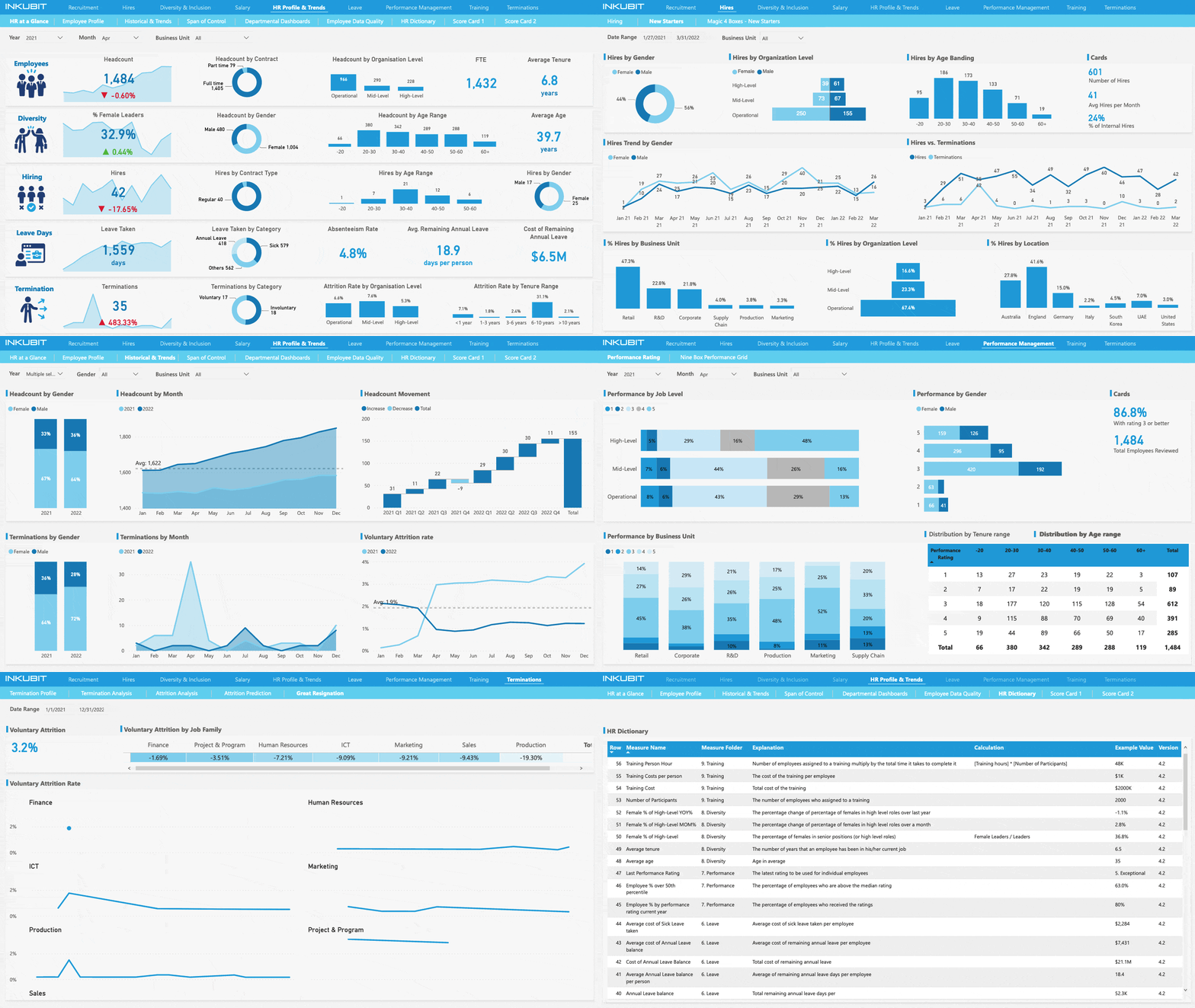
With the HR Analytics Accelerator , a uniform basis for decision-making emerges from scattered data.
As a cloud-based solution based on Microsoft Power BI and Azure, the HR Analytics Accelerator requires minimal installation and maintenance effort and empowers HR teams to:
-
Merge data sources from recruiting, learning, payroll, and employee experience
-
Create dashboards in real time with enterprise-grade governance, security, and visibility
-
Securely integrate AI-powered analytics (Copilot, Azure OpenAI)
The result: measurable efficiency gains and well-founded decisions instead of gut feeling.
Practical example: VTG AG
The project with VTG, a leading logistics service provider, shows what this looks like in reality.
Together with INKUBIT, VTG implemented the HR Analytics Accelerator based on Microsoft Power BI, with impressive results:
-
70 % Risk minimization in decision-making through data-driven analyses
-
90% higher cost transparency across all business units
-
95% faster delivery of HR management reports to executives
This shows that HR analytics projects not only deliver more beautiful dashboards, but also concrete efficiency and transparency gains at the business level.
Read more about our project → To the customer reference.
From Reporting to Predictive HR
HR analytics is not just another reporting tool – it’s the cornerstone of predictive and agentic HR.
Thanks to intelligent analyses, it will be possible in the future to answer questions such as
“Which teams are at risk of fluctuation?”
“Where do skills gaps arise?”
“How does remote work affect productivity?”
within seconds.
This is HR intelligence that reacts before problems become apparent.
Conclusion
If you don’t think of HR as data-based today, you will lose speed and trust.
With HR analytics, companies create the basis for a transparent, secure and AI-enabled HR strategy – in weeks instead of months.
Whether it’s data silos, reporting efforts, or AI readiness – in 15 minutes, we’ll clarify the potential of your HR.
Free of charge, without preparation, with concrete recommendations for action.
*Source: McKinsey Analysis of Knowledge Worker Productivity