Resource planning is becoming increasingly complex in many companies. Projects evolve more quickly, skill requirements are rising, and at the same time, there is often a lack of transparency regarding which skills are actually available. This is precisely why structured skills management is becoming more important. In our previous article,“Skills Instead of Job Descriptions,”we already demonstrated why job descriptions are reaching their limits.
However, many companies still rely on Excel spreadsheets, siloed HR systems, or outdated skill matrices. This leads to duplicate data entry, a lack of visibility, and difficulties in staffing projects. In contrast, modern HR platforms based on Dynamics 365 enable centralized and integrated management of skills, qualifications, and employee profiles.
In this article, you’ll learn how companies can manage employee skills in Hubdrive for Dynamics 365, what benefits integrated skill data offers, and what to keep in mind during implementation.
Why traditional skills management is often no longer enough
In many organizations, skills are still managed in a decentralized manner. Information about certifications, experience, or qualifications is scattered across various systems or maintained manually. At the same time, requirements are changing much more rapidly than they did just a few years ago.
This poses a particular challenge for project-driven companies. They must make quick decisions about which employees are best suited for which projects, what skills are lacking, and where further development is needed. Without a central database, this process can quickly become confusing.
In addition, skills today are much more than just HR data. They directly influence project planning, staffing, forecasting, and resource management. As a result, a lack of transparency is increasingly becoming an operational problem.

The role skills play in companies today
Skills are used much more strategically today than in the past. Companies must respond more quickly to new demands, staff projects more flexibly, and at the same time make efficient use of existing resources.
This creates new challenges for HR and project management:
- Make skills visible at a glance
- Manage project staffing more efficiently
- Identifying skill gaps early on
- Plan further development more strategically
Up-to-date skills data is becoming increasingly important, especially when used in conjunction with Project Operations and resource planning. Companies need transparency regarding which skills are available and how teams can be effectively assembled.
How Skills Management Works in Dynamics 365
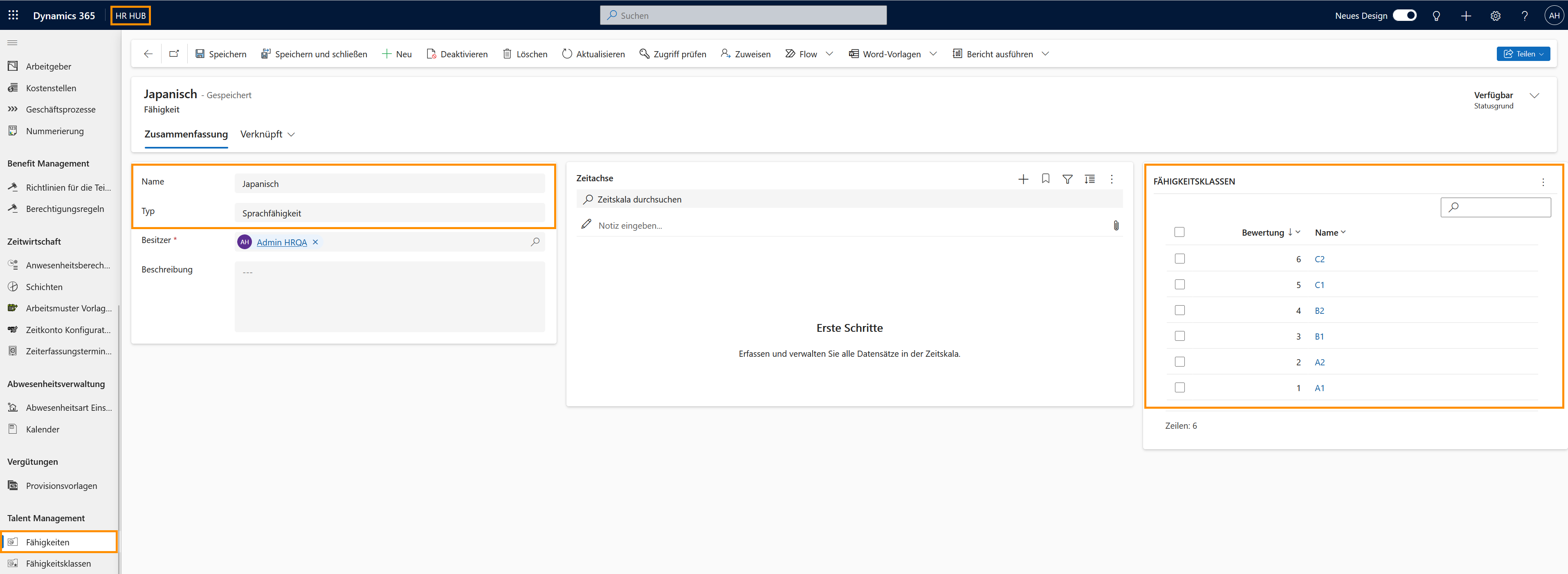
Dynamics 365, in combination with integrated HR solutions such as Hubdrive, enables the centralized management of employee skills. Skills, certifications, qualifications, and experience can be maintained and analyzed directly within employee profiles. This creates a centralized database that is accessible to HR, project management, and executives simultaneously.
Typically, the following items, among others, can be managed:
- technical skills
- Certifications
- Language skills
- Project experience
- Professional Development
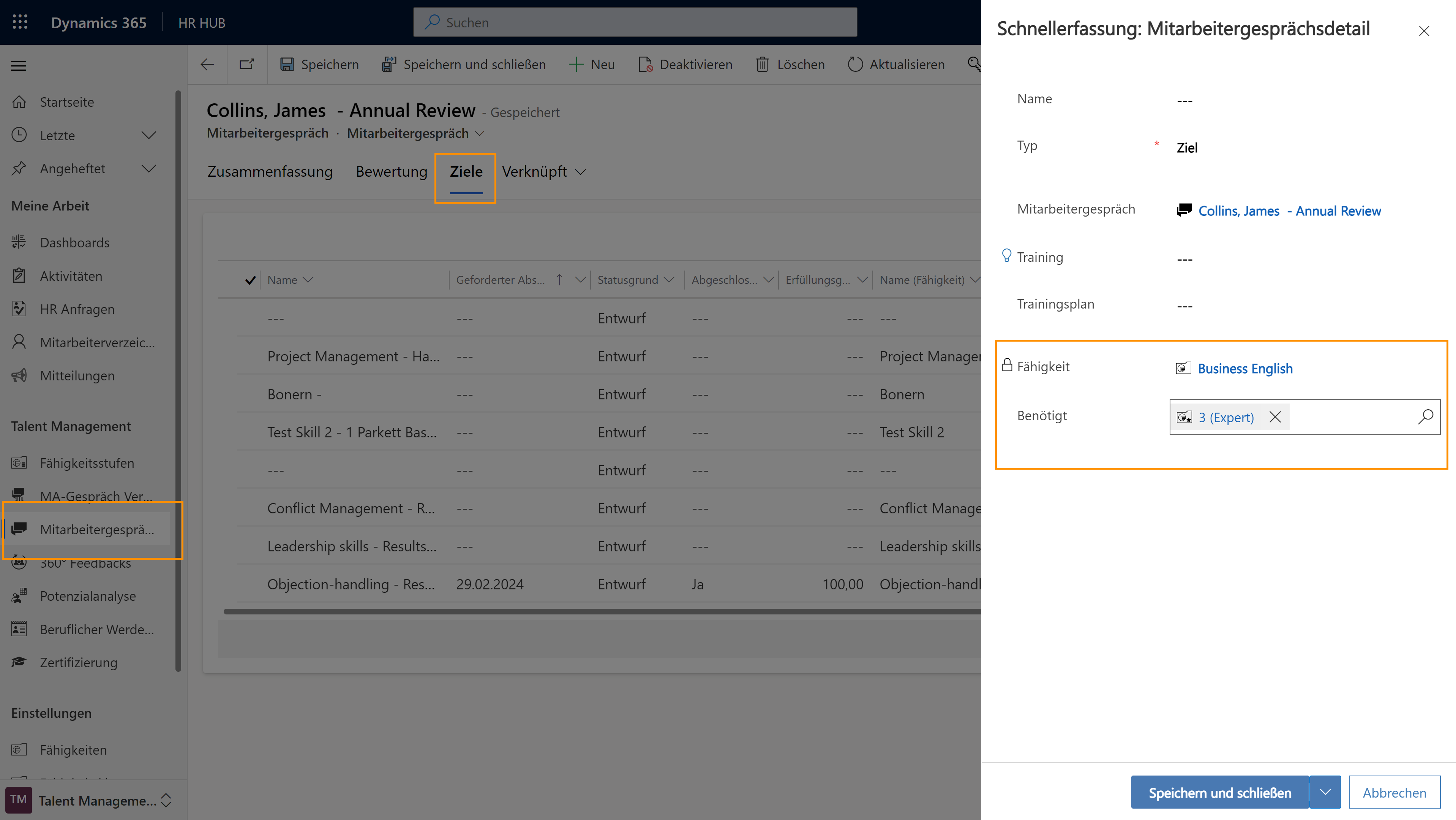
- Skill Level and Ratings
As a result, the information is no longer stored in isolated files or systems, but directly within the existing Dynamics environment. This not only improves transparency but also reduces the need for manual maintenance and eliminates duplicate data.
Why Integrated Skill Data Is Becoming Important for Project Planning
Skill transparency is increasingly becoming a competitive advantage, particularly in project-oriented companies. Project teams must be assembled more quickly, while at the same time the demands for specialization and availability are rising. Without up-to-date skill data, problems often arise in resource planning. Employees are assigned to the wrong tasks, skills are overlooked, or projects are delayed due to a lack of transparency.
With integrated skill data, project staffing can be managed in a much more targeted manner. Companies can identify more quickly:
- what skills are available
- which resources are being fully utilized
- where qualifications are lacking
- which employees are a good fit for specific projects
This not only improves planning but often also enhances the profitability of projects.
How AI and Copilot Make Skills More Transparent
AI is also opening up new possibilities for modern skills management. Microsoft is currently expanding Dynamics 365 and the Power Platform with a wide range of AI features and Copilot support. This allows skills data not only to be stored, but also to be analyzed and utilized in increasingly intelligent ways.
Examples of this include:
- Automatic skill recommendations
- Analysis of Skill Gaps
- Support with project staffing
- smart search features
- Assessment of Development Needs
This opens up new opportunities for workforce planning and resource management, particularly in larger organizations. At the same time, it is clear that AI only works effectively if the underlying data is consistently and regularly updated.
What companies should keep in mind when implementing
When implementing a system, many companies initially focus on the technical aspects. In practice, however, it quickly becomes clear that processes and data quality are just as important. A particularly critical question is which skills are actually relevant and how they should be managed consistently. Without a clear structure, differing assessments and inconsistent data can quickly arise.
Key success factors are therefore:
- clear skill categories
- consistent evaluation criteria
- regular data maintenance
- clear responsibilities
Equally important is employee buy-in. Skills management can only be effective in the long term if information is kept up to date and actively utilized.
Why Skills Management Is Becoming Increasingly Strategic
Today, skills are evolving faster than traditional job descriptions. At the same time, companies are facing increasing pressure to allocate resources flexibly and provide targeted professional development for their employees.
As a result, skills management is increasingly evolving from a purely HR-related task into a strategic management function. Today, skills directly influence project planning, delivery quality, forecasting, and growth.
It becomes particularly clear how important centralized and up-to-date skills data is when considered in conjunction with AI, project operations, and modern resource planning.
Companies that establish transparency early on can manage projects more flexibly and adapt more quickly to changes.
Conclusion
Modern resource planning requires significantly greater transparency regarding skills and qualifications than it did just a few years ago. At the same time, traditional skill matrices and isolated systems are increasingly reaching their limits.
With Dynamics 365 and integrated HR solutions such as Hubdrive, employee skills can be managed centrally and integrated much more effectively into operational processes. This improves not only HR processes but also project planning, staffing, and resource management.
Skills management will become increasingly important in the future, particularly in light of AI and modern project operations structures.
FAQ
What is Skills Management in Dynamics 365?
Skills Management in Dynamics 365 refers to the centralized management of skills, qualifications, and certifications within the Dynamics platform.
Why is skills management becoming increasingly important?
Because companies need to respond more quickly to new project requirements and allocate resources more effectively.
What are the benefits of integrated skills management?
Centralized skill data improves transparency, project planning, resource management, and employee development.
How does AI support modern skills management?
AI can identify skill gaps, assist with project staffing, and analyze development needs.
Which skills can be managed in Dynamics 365?
For example, technical skills, certifications, language proficiency, continuing education, and project experience.
Why are Excel skill matrices often no longer sufficient?
Because they are often outdated, isolated, and difficult to scale.
How does skills management improve resource planning?
Companies can more quickly identify which skills are available and which employees are a good fit for specific projects.
What role does Hubdrive play in skills management?
Hubdrive extends Dynamics 365 with integrated HR features for the centralized management of employees, skills, and HR processes.